Melbourne Property Market 2026: Recovery, Slowdown or New Growth Cycle?
The Scene: You are scrolling through the latest property news on your phone.
The first headline reads: “Melbourne house prices dip 3% as high interest rates bite.”
The very next article declares: “Melbourne set to be Australia’s top-performing capital in late 2026 as undervalued market surges.”
You sit there completely paralyzed. Are we in a slowdown? Are we at the absolute bottom before a massive recovery? Should you sell your townhouse today, or wait until the Reserve Bank finally cuts interest rates?
Trying to time the Melbourne market in 2026 feels like trying to catch a falling knife in the dark.
Here is the truth about what is actually happening in the Victorian property market right now, and the hidden legal traps you must navigate whether you are buying or selling.
1. The “Sleeping Giant” Catch-Up Phase
The Trend: For the last few years, Melbourne has severely lagged behind the massive growth seen in Perth, Brisbane, and Adelaide. Because of this lag, Melbourne is now heavily undervalued. The price gap between Sydney and Melbourne is at a historic high. Leading analysts and banks are tipping Melbourne to enter a massive “catch-up” recovery cycle in late 2026 and into 2027 as buyers recognize the relative affordability.
2. The Ex-Rental Flood (The Investor Exodus)
The Trend: While first-home buyers are trying to get in, Victorian property investors are rushing for the exit. Expanded state land taxes, high interest rates, and the government’s aggressive new renting compliance standards are forcing mum-and-dad investors to sell off their Melbourne investment properties en masse.
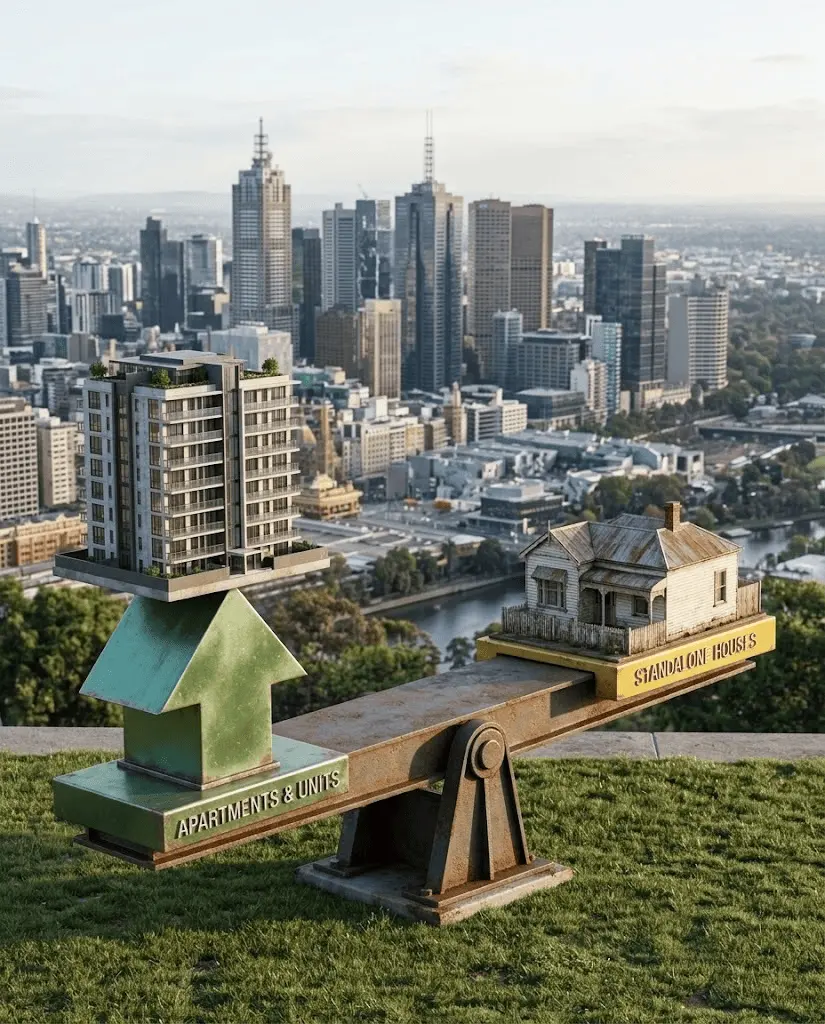
3. The Two-Speed Market (Houses vs. Units)
The Trend: We are no longer in a market where every suburb and property type goes up at the exact same time. Because borrowing capacity has been crushed by high rates, expensive standalone houses in the middle-ring suburbs have seen slight price corrections. Conversely, affordable units, apartments, and townhouses are holding incredibly strong as buyers pivot to what they can actually afford.
4. The Infrastructure “Micro-Booms”
The Trend: While the broader state average might look flat, specific pockets of Melbourne are experiencing intense localized booms. With major infrastructure projects like the Metro Tunnel going live, suburbs connected to these new transport super-hubs (like Arden, Sunshine, and Footscray) are seeing fierce buyer competition.
The Verdict
The 2026 Melbourne property market is heavily fragmented. There are incredible opportunities for buyers looking to capitalize on the “dip” before the next growth cycle, but the market is littered with dumped investment properties and strata landmines.
Our Advice:
- Don’t Skip Due Diligence: Whether the market is booming or slowing down, never sign a contract without a legal review. A bargain price often hides an expensive legal defect.
- Beware the Ex-Rental: If the property is vacant and looks like a former rental, instruct us to vigorously cross-reference the council permits to ensure all recent renovations were actually legal.
- Use the Soft Market: With auction clearance rates currently hovering around 50%, buyers have rare negotiating power. Push for Private Treaty sales with strong “Subject to Finance” and “Subject to Building Inspection” clauses.
At Prime Legal Conveyancing, we look beyond the confusing property headlines. We analyze the legal reality of the specific property you want to buy, ensuring your wealth is protected regardless of where the market moves next.


